Listen now to these few lines of noble song
That I’ve composed for those with many virtues, fit for good,
To help them yearn for merit springing from
The sacred words of He Who’s Gone to Bliss.
For those who naturally have good qualities, that is, who have formerly accumulated positive deeds, which are the causes of temporary and ultimate excellence, and who are worthy vessels for practicing positive actions and are therefore fit for virtue, I, Nagarjuna, have composed a few verses put together using the style of composition known as sublime melody. Their subject is the Dharma whose source is the Excellent Words6 or declarations of the Sugata. My purpose in composing them is that I myself or others might aspire to merit, they are worth your listening to, O king.
The wise will always honor and bow down To Buddha statues, though they’re made of wood;
So too, although these lines of mine be poor, Do not feel scorn, they teach the Holy Way.
One might think that since the Mighty One taught everything for attaining the higher realms and the lasting happiness of liberation and omniscience there is no need for this teaching. But just as the wise venerate a statue of the Sugata, whatever the quality of the material, whether it is made of some base material such as stone or wood or of a superior substance such as gold, in the same way, however excellent or poor these lines—my poetry—may be, their subject is how to reach the higher realms and the lasting happiness of liberation and omniscience, and they follow the teaching of the holy Dharma, which shows that. For that reason, to the wise, who rely not on words but on the meaning, they are worth praising; they are not to be despised but are worth listening to and putting into practice.
While you have surely learned and understood The Mighty Buddha’s many lovely words,
Is it not so that something made of chalk By moonlight lit shines gleaming whiter still?
Although you, O King, may well have absorbed the Mahamuni’s many pleasant, beautiful, and excellent words by listening to them and reflecting on them, nevertheless, as it will help make their meaning even clearer, this letter is still worthy of your attention. Take the example of a fine house that has been whitewashed with chalk: although it is naturally white, the light of the moon at midnight striking it makes it even more intensely white, does it not?
Six things there are the Buddhas have explained, And all their virtues you must keep in mind:
The Buddha, Dharma, Sangha, bounteous acts, And moral laws and gods—each one recall.
The Victorious Ones have perfectly explained six things to be kept in mind. Keep in mind the Buddha, the Buddha Bhagavan who is Thus Gone and so forth. Keep in mind the Dharma, the Bhagavan’s teaching that is excellently spoken and so forth. Keep in mind the Sangha, the Bhagavan’s Sangha of Shravakas who abide excellently and so forth. Keep in mind bounteousness, untainted by miserliness and so forth. Keep in mind discipline, unspoiled, free of faults, unadulterated, unobscured, the discipline that accomplishes the concentration praised by the wise. And keep in mind celestial beings, the gods of the realm of the Four Great Kings, and those from the Heaven of the Thirty- Three up to “Mastery over Others’ Creations,” and so on, who constitute the particular result of practicing the teachings for attaining the higher realms. Keep in mind the many virtues of each of these, as they have been described in the sutras.
With body, speech, and mind always rely On wholesome deeds, the tenfold virtuous path.
Avoiding liquor at all costs, thus find True joy to lead a life of virtuous deeds.
Because it is the nature of the positive act of concentration to lead to a pleasant result, such actions constitute the path that leads to happy rebirth. You should therefore constantly rely on the tenfold path, performing the ten positive actions while avoiding the ten negative actions— the three physical acts of taking life, taking what is not given, and sexual misconduct; the four verbal acts of lying, sowing discord, harsh speech, and worthless chatter; and the three mental acts of covetousness, wishing harm on others, and wrong views. And because they cause carelessness, abstain from intoxicants in all circumstances. In this way, take joy in a life of virtue, without being careless and harming others.
Possessions are ephemeral and essenceless— Know this and give them generously to monks,
To brahmins, to the poor, and to your friends: Beyond there is no greater friend than gift.
Having realized that possessions such as food are inconstant and fluctuate, that in changing and transforming they are devoid of essence, in order to make them meaningful try to use them properly, giving to those with good qualities (monks and brahmins), to those who suffer (the poor, the sick, and so forth), to those who help you (friends) and to those you venerate (spiritual teachers and parents). Even beyond the world there is no friend more sublime, more beneficial, than giving, because it gives rise directly and indirectly to ripened effects that are inexhaustible.
Keep your vows unbroken, undegraded, Uncorrupted, and quite free of stain.
Just as the earth’s the base for all that’s still or moves, On discipline, it’s said, is founded all that’s good.
Your discipline should have four particular features. In not transgressing the basic precepts it should be unbroken. In not transgressing the most minor branches it should be without degradation—this is the old sense of the term in Tibetan and means “unstained by faults and therefore vast and elevated.” It should be unadulterated by anything incompatible, and it should be untainted by selfish thoughts or wishing to better one’s lot. Observe all these. Just as the earth supports things moving and unmoving—beings and trees, for instance—discipline is the foundation of all good qualities, concentration, wisdom, and so forth, as our Teacher, the Buddha, has declared: reliance on discipline gives rise to concentration and therefore naturally gives rise to meditation.
Generosity and discipline, patience, diligence, Concentration, and the wisdom that knows thusness—
Those measureless perfections, make them grow, And be a Mighty Conqueror who’s crossed samsara’s sea.
Develop within you the six transcendent perfections, which cannot be fathomed by the Shravakas and Pratyekabuddhas: unstinting generosity reinforced by bodhichitta and wisdom; discipline—the avoidance of negative actions and their basis, attachment and so forth; the patience to put up with difficulties; diligence—delight in positive actions; one- pointed concentration on virtue and on the absolute; and wisdom, the knowledge of thusness, the ultimate meaning, just as it is. And be the Mighty Victor who, as the result of doing so, has reached the other side of the ocean of existence. Here Nagarjuna is saying that since one will become a Mighty Buddha through these six transcendent perfections, one should make them part of one’s being.
Those who show their parents great respect With Brahma or a Master will be linked;
By venerating them they’ll win repute, In future they’ll attain the higher realms.
The kind of person who respectfully makes offerings to his parents is unharmed by nonhumans and blessed by the gods, and is therefore to be associated with Brahma, worthy of the world’s offerings. And because he has the teacher’s blessings he is also to be associated with a master who teaches the essential point of what to do and what to give up. Besides these advantages, it is good to make offerings to them, one’s parents, for one will have a good reputation even in this life, and in the hereafter, that is, in the next life too, one will attain the higher realms. So apply yourself to venerating your parents and others.
Eschew all harm, don’t steal, make love, or lie, Abstain from drink, untimely greed for food,
Indulging in high beds, and singing too, Refrain from dancing, all adornments shun.
These concern laypeople. Abstain for twenty- four hours from the following various acts: killing, or here, harming, other living beings; theft—that is, taking what is not given; sexual intercourse (“impure conduct”); telling lies (in particular, claiming to have sublime qualities one does not have); drinking alcohol, which produces a careless state of intoxication; greedily eating at inappropriate times; indulging in a bed higher than eighteen inches; the three activities of singing, dancing (along with dressing up), and playing music; and these three: wearing necklaces of jewels and other ornaments that are a source of vanity, wearing multicolored ornaments, and using sweet smelling perfumes and so forth.
For men and women who keep this eight- branched vow And emulate the vows the Arhats took,
Their wish to nurture and to cleanse will grant Them handsome bodies as celestial gods.
As a result of their desire to nurture the seed of positive actions and purify negative actions, men and women—that is, those on the three continents where they can observe such discipline—who keep these eight branches with renewal and confession, following the example of the discipline of Arhats in the past, are granted (and obtain) a pleasing body in the six realms of the gods of enjoyment.
Stinginess and cunning, greed and sloth And arrogance, attachment, hate, and pride
(“I’ve breeding, good looks, learning, youth, and power”)— Such traits are seen as enemies of good.
Consider the following traits as enemies, since they destroy positive actions: niggardliness with regard to one’s own possessions; craftiness in skillfully playing down one’s own defects, and deceitfulness in pretending to have certain qualities so as to beguile others; attachment to body and wealth; laziness, that is, not delighting in virtue; arrogance, thinking one has qualities that one does not have; desire—craving for existence; hatred—the hatred of the inhabitants of the Hell of Torment Unsurpassed; and pride—being proud of one’s breeding (“I am superior,” one thinks), proud of one’s physique, proud of one’s learning, proud of one’s youthfulness (“I’ve lost none of my youthfulness, I’m still in top form.”), and proud of one’s power (“How immensely powerful I am!”).
Carefulness is the way to deathlessness, While carelessness is death, the Buddha taught.
And thus, so that your virtuous deeds may grow, Be careful, constantly and with respect.
Carefulness is characterized by practicing virtuous activities and guarding the mind from tainted activities. As the Capable One has taught in such passages as this one from the sutras, it is the way beyond suffering, like the nectar of immortality. Carelessness becomes the way to experiencing the suffering of birth and death in samsara. Accordingly, so that you might give birth to virtuous ways where you have not done so, and where you have conceived them develop them more and more, respectfully practice carefulness, habituating yourself all the time to virtuous activities.
Those who formerly were careless But then took heed are beautiful and fair,
As is the moon emerging from the clouds, Like Nanda, Angulimala, Darshaka, Udayana.
One might wonder whether there is any point in instructing those who have been careless in the past. Some people, however, having previously been careless (indulging without thinking in negative actions as a result of their being dominated by afflictive emotions or influenced by evil companions), subsequently, on meeting a spiritual friend and wholeheartedly adopting what is right and abandoning wrong, become careful. Such people, as we can see from the following examples, are like the moon unobscured by the clouds—utterly beautiful.
Nanda was a randy young Shakya, a younger brother of the Buddha. He could not part from his wife for a single instant. He took ordination in the Buddha’s doctrine but still thought longingly about his wife, day and night, and thus failed to practice virtue. The Buddha, seeing that he would be reborn in the hells, instructed him personally. As a result Nanda became afraid, started practicing the path, and attained the level of Arhat. He was commended by the Buddha as the Shravaka who had most successfully controlled his senses.
Angulimala was the gullible son of a brahmin. His teacher deceitfully instructed him, “If you kill a thousand people and make a garland of their fingers, you will go to the celestial abodes.” He had slain all but one of the thousand when the Buddha ordained him and taught him the Dharma. He became an Arhat.
Then there is the example of Darshaka, another name for Ajatashatru. Having met his companion in evil, Devadatta, he committed a large number of negative actions, among them murdering his father, the king, who was a follower of the Dharma. Later he gained faith in the Buddha, was freed from the results of his negative actions, and became an Arhat.
Udayana killed his mother when she prevented him sleeping with someone else’s wife. He took ordination, but when it was realized that he had committed a “crime with immediate retribution,” he was expelled by the Sangha and went to a remote region. He built a temple and stayed there. In due course a large number of monks in the area gathered there, he became their Elder and properly cared for the Sangha. As a result, when he died he had but a “yo- yo” rebirth in hell as the fully ripened effect of his crime with immediate retribution and was then reborn as a god, attaining the result of a Stream Enterer on the Buddha’s path.
Hard to practice, patience knows no peer, So never allow yourself a moment’s rage.
Avoid all anger and you will become A Non- Returner, so the Buddha said.
There is no other difficult practice equal to patience—not getting angry with someone who harms you, and even if you do get angry, not remaining so. It is the ultimate austerity. Therefore do not allow yourself even the slightest occasion for anger, which is incompatible with such a sublime austerity as patience. Should you wonder why, the Buddha himself declared that by being patient and avoiding getting angry one will attain the ultimate result of Non- Returner.
“He’s abused me, struck, defeated me, And all my money too he has purloined!”
To harbor such resentment leads to strife; Give up your grudge and sleep will easily come.
By harboring resentment—“He insulted me with abusive language, he hit me with things like stones and sticks, he got the better of me by ridiculing me and using his power, he ran off with my money”—one builds up the motives for negative actions, physical and verbal, thereby sparking off disputes. By abandoning grudges one will gain the temporary result of a mind free of anguish and so fall asleep happily.
Understand your thoughts to be like figures drawn On water, sandy soil, or carved in stone.
Of these, for tainted thoughts the first’s the best, While when you long for Dharma, it’s the last.
Of all the various constant and inconstant mental activities that different kinds of sentient beings can have, you should know that thoughts are like figures drawn on water, which instantly dissolve, or like drawings on sand, which are erased by different conditions, or like figures drawn on stone, which are indelible. Where thoughts, either positive or negative, are like drawings on sand, this is of medium value. Of these three cases, the first, where the thoughts are inconstant like figures traced on water, is the best as regards emotionally tainted thoughts. As regards aspirations to undertake Dharma practice, the last, where the thoughts are stable like figures drawn on stone, is the best. So practice accordingly.
Three kinds of speech are used by humankind, And these the Victor variously described:
Like honey, sweet; like flowers, true; like filth, Improper speech—the last of these eschew.
The Victorious One who has overcome evil ways spoke of three kinds of speech in human beings, namely, sweet, pleasing words, truth, and improper speech. Of these three kinds of speech that people use, the first, he said, delights, like honey; the second is beautiful and worthy of praise, like a flower; the last, because it is to be despised, is like filth. Accordingly, avoid the last of these, and make good use of the first two.
Some there are who go from light to light, And some whose end from dark is darkness still,
While some from light to dark, or dark to light End up, thus four, of these be as the first.
There are four kinds of individual. Those who go from the light of the higher realms and again end up in the light of the higher realms of gods and humans. Those who go from the darkness of the lower realms and end up in darkness, being again reborn in the lower realms. Those who go from the light of birth in the higher realms to end up in darkness as the most wretched of humans or as beings in the three lower realms. And those who go from the darkness of the three lower realms and wretched states to end up in the light of the higher realms. Of these four kinds of individual, you should be the first, the one who goes from light to light.
Men, like mangoes, can be sour and yet look ripe, Some though ripe look green, and others green
Are sour indeed, while others still look ripe And ripe they are: from this know how to act.
Human beings are like the fruit of the mango tree. Some seem ripe— their actual deeds are wholesome—but are unripe—their intention is base. Some seem unripe—their deeds are base—but in fact are ripe—the intention is wholesome. Others look unripe and are unripe—both intention and deed are unwholesome. Yet others look ripe and are ripe—both intention and deed are wholesome. Knowing the meaning of each of these four characteristics, whatever you do you should gain a proper understanding of the essential point of avoiding and adopting. The last of these four cases is the greatest ally in performing positive actions.
Do not gaze on others’ wives, but if you do, Regard them as your mother, child, or sib,
Depending on their age. Should lust arise, Think well: they are by nature unclean filth.
Do not gaze at other people’s wives with designs, and even if you do look at them, try and think of them, depending on their age, as your mother if they are older, as a daughter if they are younger, and as a sister if they are the same age as you. And if that does not work and you still feel lustful, reflect well on their unclean nature, on their unpleasant smell and so on.
Guard this fickle mind as you would do Your learning, children, treasure, or your life.
Renounce all sensual pleasure as if it were A viper, poison, weapon, foe, or fire.
If thinking in this way still does not stop you, you must guard your mind as follows. Guard the mind, which moves onto objects without staying still for a single second, from objects that tend to give rise constantly to afflictive emotions. How can one do this? Guard the mind in the same way as you protect what you have learnt from being forgotten;25 guard the mind like a beloved child; guard it as you would some valuable treasure; guard the mind as if it were your cherished life. And that is not all. Concerning the pleasures of the senses, Nagarjuna instructs us to shy away from all sensual pleasure as if it were a venomous snake, a noxious poison, a lethal weapon, an enemy obstructing one’s temporal life and happiness, or a fire burning one.
The pleasures we desire will bring us ruin, They’re like the kimba fruit, the Buddha said.
Eschew them, it’s their chains that tightly bind The worldly in samsara’s prison- house.
You might say, “Don’t pleasurable experiences give rise to happiness?” Although for ordinary people pleasures may appear to be related to happiness at the time they are enjoyed, in the end they are their undoing. They are, the Sovereign of the Conquerors said, like the fruit of the kimba tree, which grows in the western continent of Aparogodaniya: its skin is attractive but it is unpleasant inside; or it tastes delicious when one first eats it, but later it makes one ill. So, advises Nagarjuna, give up these pleasures, for it is the chains—the afflictive emotions—of attachment to pleasure that tightly bind the worldly in the prison of samsara.
Of he whose fickle senses are controlled— These six that never cease to dart at things—
And he who’s fought and conquered many foes, The first is truly brave, the wise have said.
The six sense organs, the eyes and so forth, change constantly as they encounter their objects, form and the others: they are unstable, making the mind flit towards their objects. Of the individual who is able to use antidotes to control these six sense organs and someone who is courageous in battle and victorious over all the hordes of enemies one could possibly defeat, the bravest, the real hero, the wise have said, is the first, the winner in the battle with the senses. For while we see plenty of people who win wars, there are no ordinary beings who manage to conquer their senses.
Regard a young girl’s body on its own, Its smell so foul, its openings nine—a pot
Of filth, insatiable, and clothed with skin. Regard too her adornments on their own.
Earlier Nagarjuna referred to the unclean nature of women’s bodies. In what way are they to be regarded as impure? If you consider a young woman’s body on its own, unadorned, it smells unpleasant, has nine orifices leaking foul matter, and is full of dirty things like excrement and urine. It is like a jar containing all sorts of filth, difficult to fill—for it is never satisfied, however much it has to eat and drink—and covered with skin, which is devoid of essence. That is all there is to it. You might argue that it is the things she adorns herself with that make one want her. But if you look at her adornments too, on their own, away from the body, you will no longer feel desire.
A man with leprosy, consumed by germs, Will stand before the fire for comfort’s sake
But still find no relief, so know the same is true For those attached to the pleasures they desire.
This verse shows the defect of attachment in the subject. In their longing to be comfortable, lepers afflicted by the microbes consuming them stand close to a fire, but there still is no relief for afterwards their distress again increases. Know that the same is also true for childish beings who are attached to pleasures.
In order that you see the absolute, Get used to truly understanding things.
No other practice is there such as this Possessed of special virtues such as these.
Because it is the domain of the highest wisdom, the absolute truth—the unmistaken thatness—has to be seen with the eye of primal wisdom, and in order to do this you must examine outer and inner things, such as form, with superior intelligence and thereby reach a correct understanding that they are devoid of true existence. Get used to this again and again. There is no other method in the world that has the special qualities of this sort of perfect intelligence that can overcome afflictive emotions and arouse primal wisdom, their antidote.
To those possessed of breeding, learning, handsome looks, Who have no wisdom, neither discipline, you need not bow.
But those who do have these two qualities, Though lacking other virtues, you should revere.
People who come from a good family, who are good- looking, and learned in all the sutras and shastras, and yet do not have the twin virtues of wisdom (the realization of the natural state) and discipline (whereby they avoid breaking their vows) possess none of the good qualities of the holy beings and are therefore not worthy of reverence. On the other hand, those who possess these two virtues of wisdom and discipline are to be respectfully venerated even if they lack other qualities, such as breeding and good looks, because anyone who has the wisdom to know what to do and what not to do, and the discipline to not indulge in negative actions, is to be counted as a holy being.
You who know the world, take gain and loss, Or bliss and pain, or kind words and abuse,
Or praise and blame—these eight mundane concerns— Make them the same, and don’t disturb your mind.
People meditating on emptiness in formal meditation sessions must not be carried away in the postmeditation period by the eight ordinary concerns. For this reason Nagarjuna addresses the king, “You who are thoroughly knowledgeable on the right worldly ways,” and instructs him thus: “Acquiring wealth and losing it; being happy (having pleasurable experiences) and unhappy (experiencing suffering); hearing pleasant words and unpleasant ones; being praised openly and criticized behind one’s back— these are known as the eight preoccupations common to ordinary worldly folk, with their different happy and unhappy moods. If you are to attain the state beyond the world, equalize these eight worldly concerns without dwelling on them as being things to be happy or sad about.”
Perform no evil, even for the sake Of brahmins, bhikshus, gods, or honored guests,
Your father, mother, queen, or for your court. The ripened fruit in hell’s for you alone.
One might wonder whether it is wrong to commit negative actions for the sake of one’s teacher, or brahmins, and so on. O King, you must not commit negative actions even for the sake of brahmins, monks, gods, guests, your parents, queen, or court. The ripened result of negative deeds, hell, is allotted to you alone, the person who has done them, and to no one else as accomplice: no one but you will receive your allotted fate.
Although performing wrong and evil deeds Does not at once, like swords, create a gash,
When death arrives, those evil acts will show Their karmic fruit will clearly be revealed.
Someone with nihilist views might say that the fully ripened effect of negative actions done in this life cannot be seen now, so it will not occur in the
next life. But even though the performance of evil deeds does not immediately cut one as when one touches a sharp weapon—in other words, it
does not make one suffer straightaway—when the time comes to die, the
result of the negative actions, whatever it may be—being tortured by
Yama’s brutal henchmen and so on—will become clearly evident.
Faith and ethics, learning, bounteousness, A flawless sense of shame and decency,
And wisdom are the seven riches Buddha taught. Know, other common riches have no worth.
The Capable One spoke of the following attributes as the seven noble
riches, for they are the causes of untainted happiness and are not in any
way ordinary. Faith—that is, the three kinds of faith in the Three Jewels
and confidence in the law of actions and their effects. Discipline, the avoidance of harmful actions. Learning that comes from listening to the holy
Dharma that leads to liberation, with the intention of gaining complete
knowledge. Being generous—with a desire to make offerings and to help
beings, to give away all one’s possessions without expecting anything in
return or any karmic reward. A sense of shame with respect to oneself
that prevents one from indulging in negative actions, and that is unstained
by such things as jealousy or seeking veneration. A sense of decency with
regard to others that stops one from engaging in unvirtuous practices. And
wisdom, that is, knowledge of the particular and general characteristics of
phenomena.
You should realize that other common things that the world calls
riches—gold, for instance—are of no value in obtaining untainted qualities; they are worthless, hollow, and without essence.
Gambling, public spectacles and shows, And indolence, bad company, strong drink,
And nightly prowls—these six will lead to lower realms And damage your good name, so give them up.
Playing dice and other gambling games, attending public spectacles, idling
around with no inclination to do positive actions, keeping the company of
evil friends, drinking, prowling around at night in order to steal—these six
lead to rebirth in the lower realms in your next life, and in this life are
causes for your reputation being spoilt. Therefore, Nagarjuna advises, give
up these six.
Of all great wealth, contentment is supreme Said he who taught and guided gods and men
So always be content; if you know this Yet have no wealth, true riches you’ll have found.
Of all the valuable things there are, like gold and silver, the very greatest
of riches is to be content and have little desire for such things, as the
Teacher of gods and men, the Buddha Bhagavan.Therefore, in all circumstances be content. When you know contentment, even if you do not possess a little gold or other valuable things, you
will be truly rich, because once content, you have achieved the very reason for acquiring things.
Kind Sir, to own a lot brings so much misery, There’s no such grief for those with few desires.
The more the naga lords possess of heads, The more their headaches, the more they have of cares.
“Kind Sir,” says Nagarjuna, addressing the king (for he is someone who is
easy to get along with), inasmuch as those who have a lot of things like
gold and other possessions must suffer, first in acquiring them, then in
guarding them, and finally in seeing them dispersed, those with few
desires have no such suffering. To take an example, the more snake heads
the supreme nagas (the naga kings) have, the more headaches they are
liable to get. Some commentaries explain this metaphor as follows: the
more heads the naga kings have, each head bearing a crown jewel, the
greater the misery the naga kings experience guarding those jewels.
A murderess who sides with enemies A queen who holds her husband in contempt,
A thieving wife who steals the smallest thing— It’s these three kinds of wife you must avoid.
There are three kinds of wife you should avoid. One who naturally sides
with one’s enemies and goes around with other men, and who out of jealousy wants to kill her husband, like a murderer. One who does not honor
her husband, but treats him contemptuously, like a queen. And one who
steals the smallest thing, not to speak of valuables, like a thief.
A wife who like a sister follows you, Affectionate like a true and loving friend,
Supportive like a mother, obedient like a maid— She must be honored like a family god.
You might wonder, then, what kind of person you should marry. A wife
who is like a sister emulating her brother: she follows her husband without scorning what he says. A wife who is like a close friend with whom one
gets on very well and who takes care of one: she is a true friend. A wife
who is like a mother wanting to help her child: her desire is to help her
husband. And a wife who is like a maid obeying when one makes her
happy: she submits to one’s authority. Such wives will not dishonor one’s
family and so are to be relied upon or honored like a family god.
Take food as medicine, in the right amount, Without attachment, without hatefulness:
Don’t eat for vanity, for pride or ego’s sake, Eat only for your body’s sustenance.
When you eat food, it should be in the right amount, like medicine that
does the body good. In doing so, use food without an attitude of attachment or hatred, reflected in the way you eat: do not eat because of vanity, wanting to be tough, nor because of hatred, arrogantly thinking, “I will
build up my physical strength and beat up my enemies,” nor in order to
strengthen your various limbs or in order to take care of your body, to
take care of “me.” Eat simply to sustain your body as a means for accomplishing positive actions.
O Knowledgeable One, recite all day And in the first and last watch of the night.
Then in between these two sleep mindfully So that your slumbers are not spent in vain.
Great being, you who know what to do and what not to do, having spent
the whole of the day and the first and last of the three watches of the
night reciting, meditating, and so on, in the middle of the night too, while
you are asleep, do not let your slumber be fruitless or pointless but keep
mindful, thinking that you will rise quickly and put your efforts into practicing virtue. In this manner, sleep in between these first and last watches:
as a result of your attitude, your sleep will become positive.
Constantly and perfectly reflect On love, compassion, joy, impartiality.
And should you not attain the higher state, At least you will find bliss in Brahma’s world.
Focusing on all sentient beings, practice the four boundless qualities: love,
which is the wish that they be happy; compassion, the wish that they be
free from suffering; sympathetic joy, which is to feel happy when they
are happy; and impartiality, which is to treat them impartially as equals,
without attachment or aversion.
Of these four, the meaning of the term “boundless love” is that one
focuses on boundless sentient beings (as the object of concentration) and
that boundless merit comes to the meditator.
For compassion and the others there are three categories: compassion
focusing on sentient beings; focusing on phenomena; and without concepts. The first is that of ordinary beings and takes the form of wishing that
all may be free from suffering. The second, focusing on phenomena, is
that of sublime beings of the Shravaka and Pratyekabuddha vehicles who,
since they have realized the no- self of the individual, designate merely
the phenomena of the aggregates as sentient beings; it takes the form of
the wish that they may themselves be free from suffering. The third, being
without concepts, takes the form of viewing sentient beings as illusion- like
through realizing the no- self of phenomena, and wishing they be free
from suffering. This is the compassion that the sublime beings of the Great
Vehicle have.
According to The Ornament of the Mahayana Sutras, the Shravakas
and Pratyekabuddhas do have realization of the no- self of phenomena, in
which case the last two categories belong to all the sublime beings of the
three vehicles. They have one essence but different aspects.
How should one meditate on these four boundless qualities? Divide
beings into three categories: friends, enemies, and those that are neither.
Begin by concentrating on your parents, relatives, and friends, and meditate by wishing that they may meet with happiness and so forth. After
that do the same focusing on beings who are neither your friends nor your
enemies. Finally, meditate focusing on all those for whom you feel enmity.
The meditation is said to be perfect and complete when one’s enemies and
one’s relatives and friends become the same.
As for the scope of the meditation, concentrate first on the beings in
Jambudvipa, then on those in the universe of a billion worlds, and then on
all the beings filling the whole of space.
Meditate constantly and well on these four boundless qualities and
through the wisdom of these boundless qualities you will attain nirvana.
Even if you do not attain the higher state of nirvana immediately, you
will gain the happiness of the first Brahma world.
The four samadhis, which in turn discard Pursuit of pleasure, joy and bliss and pain,
Will lead to fortune equal to the gods’ In Brahma, Light, Great Virtue, or Great Fruit.
The first concentration comprises the antidote branch—discursive thinking and subtle analysis—used to abandon the pursuit of pleasure, that is
to say, yearning for pleasure and wanting to get rid of anything that irritates one; the joy and bliss that arise from solitude; and the one- pointed
concentration characterized by the latter.
The second concentration comprises the antidote branch—a very clear
mind—used to abandon analysis; the joy and bliss that come from concentration; and the one- pointed concentration characterized by the latter.
The third concentration comprises the antidote branch—mindfulness,
vigilance, and evenness—used to abandon joy; bliss; and the one- pointed
concentration characterized by the latter.
The fourth concentration comprises the antidote branch—perfect mindfulness and evenness—used to completely eliminate bliss and sufferings;
neutrality of feeling; and the one- pointed concentration characterized by
the latter.
By meditating on these four causal concentrations, Nagarjuna says, one
attains the same fortunate rebirths as the gods of the four resultant concentrations, which are subdivided into lesser, middling, and greater categories as follows. The realm of the first concentration consists of The Pure,
Priests of Brahma and Great Pure Ones;37 the realm of the second concentration likewise comprises Dim Light, Measureless Light, and Clear Light;
that of the third concentration is divided into Lesser Virtue, Limitless
Virtue, and Flourishing Virtue; and the realm of the fourth concentration
consists of Cloudless, Merit- Born, and Great Result.
Great good and evil deeds are of five kinds, Determined by their constancy, their zeal,
Their lack of counteragent, their perfect fields. So strive in this respect to practice good.
There are five great kinds of positive or negative actions. (1) Actions that
are performed constantly (with a constant underlying attitude) and that
are special in terms of their application. (2) Those that are done with great
determination (as the attitude of the moment) and that are special in terms
of their intention. (3) Those that have nothing to counter them, that is, an
opposing action that can destroy them, and are special in terms of counteragent. And beneficial or harmful acts that are special in terms of their
field, this being of two kinds: (4) “beneficial fields” such as parents and
teachers and in particular bears, monkeys, and so forth that have helped
one as in the stories of the Buddha’s previous lives; and (5) “fields who
have the most essential qualities,” that is, the Three Jewels and those who
have risen out of the samadhi of cessation.
Make an effort, therefore, to avoid great negative actions and to practice great positive actions.
A pinch of salt can give its salty taste To a little water, but not to the Ganges stream.
So know that, likewise, minor evil deeds Can never change a mighty source of good.
Just as a little salt—a few fractions of a measure—can make a small
amount of water taste salty but cannot change a huge river like the
Ganges, know that in the same way even a small negative action can harm
someone whose positive deeds are weak but cannot harm anyone who has
frequently performed an immensely positive action, vast in scope. Here,
Nagarjuna is instructing us to apply ourselves to powerful positive actions
repeatedly on a vast scale.
Wildness and remorse, and hateful thoughts, And dullness- somnolence, and yearning lust,
And doubt are hindrances—please know these five Are thieves that steal the gem of virtuous deeds.
There now follows an explanation of how the five “hindrances” are the
enemies of the samadhis, perfect freedoms, and so forth, and must therefore be assiduously avoided.
Wildness, where the mind proceeds out towards objects that attract it,
and remorse, where one thinks of evil acts one has done. These come under
the same sphere as movement and so their antidote is sustained calm. They
are nourished by four things: thinking about one’s relatives, thinking
about one’s country, thinking that one will not die, and remembering the
games, laughs, and good times one enjoyed in the past. Since wildness and
remorse are both nourished by the same things, they are counted as a single hindrance.
Malice, which is the agitation in the mind caused by things that arouse
hatred. In the explanation that follows on how discipline is hindered, it is
grouped with craving (see below), but in the context of the five hindrances
such hatred is counted as a single hindrance. Its antidote is patience.
Dullness, in which body and mind are disinclined to meditate and one
feels in low spirits, and somnolence, where the mind, powerless, withdraws and folds in on itself. These come under the same sphere as dull-
wittedness and lack of clarity and are therefore counted as one. Their
antidote is clarity. They are nourished by five things: feeling thick—
unclear, heavy, and disconnected; unhappiness; stretching; indigestion; and
feeling low- spirited.
An inclination—through craving—for the five pleasures of the senses
such as food and sex. This is counted as one in the context of the five hindrances, though as a hindrance to discipline it is taught as being classed
with malice (see above). Its antidote is to meditate on ugliness and give up
attachment.
Indecision, where one is of two minds concerning liberation and the
path to liberation.
Know that these five hindrances are thieves that rob you of the jewel
of virtue, and avoid them, advises Nagarjuna.
Craving and hatred both adversely affect the superior training in discipline. The reasons for this are, respectively, that when one is influenced by
craving for pleasure one will not take up discipline properly in the first
place; and that once one has taken it up, when other people admonish one
to follow the precepts correctly, one gets angry and cannot accomplish
anything properly in accord with the Dharma.
Dullness and somnolence both impair superior concentration because
when one meditates on the causes of sustained calm—the four boundless
qualities and so forth—they make the mind low- spirited.
Wildness and remorse adversely affect superior wisdom because when
one meditates on the reasons for concentrating they cause the mind to be
distracted.
Indecision adversely affects both one- pointedness and wisdom because
when one meditates on the causes of the equanimity that is the union of
sustained calm and profound insight, as a result of doubt one cannot reach
a decision and one is unable to settle in equanimity.
Since they obscure the samadhis and perfect freedoms and so forth, or
the three precious trainings, it has been said, “Be diligent in avoiding the
five hindrances.”
With faith and diligence and mindfulness, And concentration, wisdom, five in all,
You must strive hard to reach the “highest state”: As “powers” these “forces” take you to the “peak.”
Five elements are described in this verse. Confidence, namely confidence
in the Four Noble Truths; diligence, that is to say, genuine joy in adoption
and rejection related to the Four Noble Truths; mindfulness—never letting
the objects to be meditated on slip one’s mind; concentration, that is to say,
one- pointed focus supported by mindfulness of the four truths; and wisdom, which perfectly discerns them when one settles evenly in concentration. At the time these five become the direct cause leading to the sublime
path we speak of the supreme mundane level.
At the stage of “acceptance” they are referred to as the five irresistible forces, for they cannot be
overcome by adverse factors. Apply yourself assiduously to these and get
used to them. They are first referred to here as irresistible forces for the
stage of “acceptance,” but at the stage of “warmth” they are known as
“powers” because they make one more powerful for clearly seeing the
truth. As these powers increase one reaches the “peak,” because one’s
sources of good become unwavering. This verse, therefore, is an instruction on being diligent.
“I’m not beyond my karma, the deeds I’ve done; I’ll still fall ill, age, die, and leave my friends.”
Think like this again and yet again And with this remedy avoid all arrogance.
“I will be sick, I will grow old, I will die, I will be separated from those I
love, my relations and so forth. In such manner, the fully ripened effect of
my actions will come to me and to no one else, and I am therefore not
above depending on what I did in former lives.” To think like this again
and again is the antidote to such things as arrogance: make every effort
not to become arrogant by meditating on this antidote.
If higher birth and freedom is your quest, You must become accustomed to right views.
Those who practice good with inverse views Will yet experience terrible results.
Nagarjuna begins with the following exhortation: If you truly seek the
higher realms (the abodes of gods and men) and liberation (that is to say,
the levels and paths leading to omniscience), you must constantly get
used to the right view; for confidence in the law of karma, with the relative view concerning subject and object, is the cause of higher rebirth,
while the wisdom that realizes the true nature of subject and object is the
cause of liberation.
What fault, you might ask, would there be in not having the right view?
People who have wrong views with regard to actions, cause and effect,
completely destroy their sources of good. At the same time, however many
positive deeds they may perform, such as acts of generosity, those who
are very attached to material things, and who do not have the view or realization that they are empty, possess the terrible cause of rebirth in samsara as the fully ripened effect of all their actions.
Know this truth: that men are ever sad, Impermanent, devoid of self, impure.
Those who do not have close mindfulness, Their view four times inverted, head for ruin.
Looking at things with the three kinds of wisdom, know that human
beings are in truth unhappy on account of the three types of suffering;44
they are impermanent with each instant that passes; devoid of self, since
there is no doer; and, as regards their flesh, bones, blood, and so forth,
impure. Those who are not closely mindful of these four and who do not
examine them with wisdom view things in four mistaken ways: they see
their impure bodies as pure, the suffering they experience as happiness, the
impermanent mind as permanent, and selfless phenomena as a self. Such
people are destroyed by the suffering of samsara and the lower realms, so
for this reason you must be diligent in closely applying mindfulness.
Form is not the self, the Buddha taught, And self does not have form, nor dwell in form,
While form dwells not in self. Thus you must see The four remaining aggregates are empty too.
If there is a single self, is its nature that of the aggregates—form and the
rest? Or does it exist as something else? The answer to the first question
is “No.” The scriptural authority for this is a sutra, which states, “Form is
not the self ...,” and continues until, “... consciousness is not the self.”45
Reasoning also applies, as follows. Form is not the self; if the self were the
same as form and the other aggregates, it would have to be impermanent
and multiple. And if you assert that form and the other aggregates exist
substantially, then the self must exist substantially and the clinging to an
“I” would be the subject of a substantial thing, in which case you would
be viewing things correctly and it would therefore be impossible to use an
antidote to get rid of the seed.One might ask, are form and the rest something else? Does the self use
form and the other aggregates as a support in the same way that Devadatta—that is, any person—makes use of his wealth, cattle, bed, trees, and
so forth? In the first place, this is not the case, for the scriptures say, “The
self does not possess form ...” and so on to, “... it does not possess consciousness.” And reasoning shows that, unlike Devadatta who has control
over his cattle, the self does not possess form and so on as things to be
controlled, because we can see that form and the other aggregates, without the self wanting it, change into something else and perish.
Aggregates that are different from the self are also not possible from a
second point of view. Form and the rest are not multiple locations for the
self to dwell in, as the scriptures show: “The self does not dwell in form
...” and so on to, “... the self does not dwell in consciousness.” And reason
tells us that, unlike Devadatta sitting on a woven mat, the self cannot dwell
in form and the other aggregates as though using them as a support; for
if that were the case, the aggregates being impermanent, it would follow
that the self, too, would be impermanent.
There is yet a third point of view, stated in the scriptures as follows:
“Form does not dwell in the self ...” and so on to, “... consciousness does
not dwell in the self.” The reasoning is that the aggregates do not dwell in
the self, supported by it in the same way that a tree is supported by the
earth, because aggregates taking the support of a permanent self could
never perish. Furthermore, their birth and destruction would depend on
the self and this does not happen because one conceives of the creation
and destruction of outer forms as occurring without a self.
This is how we investigate form. In the same way, you should also realize profound emptiness, as it is, in the four remaining aggregates (feeling
and so forth), using scriptural authority and reason, as explained above, to
show that there is no self that is of the same nature as the aggregates or
different from them.
Explaining things the other way round, it is said in the sutras that for
each of the five aggregates there are four views—the view of form as the
self, and so on—making twenty extreme views in all. The Buddha taught
that the antidote to these is “Form is not the self.”
The aggregates are not a simple whim, From neither time nor nature do they come,
Nor by themselves, from God, or without cause; Their source, you ought to know, is ignorance,
From karmic deeds and craving have they come.
Form and the other aggregates do not happen adventitiously, merely out
of wishful thinking, with no dependence on other conditions: the aggregates are not a result of one’s own fanciful thinking, because they arise
from individual causes and conditions. Neither do they arise from something eternal in time, as the Eternalists would claim, since there is no time
that is independent of causes and conditions. Since a result cannot be produced from a permanent entity, they do not happen from transformation
by a single permanent nature, the prakriti (“primal substance”), in which
rajas, tamas, and sattva are in equilibrium, as the Samkhyas claim. And
since a fruit cannot be produced from a seed without the seed being altered
and without depending on conditions, they do not happen by themselves,
as the Mimamsakas hold. They do not come from the Naiyayika School’s
Ishvara,
because a result comes from a cause that has to precede it. Neither do they come into being without a cause: if they arose without a
cause, they would either have had to have been there all the time or never
ever be!
Then what cause do they come from? To take an example, just as a shoot
is produced by watering a healthy seed covered with manure, know that
the aggregates come from powerful karmic actions covered by unknowing—that is to say, ignorance—and, as it were, moistened by craving
To feel that one is ethically superior, To view one’s body wrongly, and to doubt—
With these three fetters, you should understand, The way through freedom’s city gates is blocked.
Ethical superiority, which is to consider that discipline and ascetic practices based on wrong views purify or lead to liberation; the view of the
transitory composite, whereby one mistakenly regards one’s body, the five
causal aggregates, as “I” and “mine”; and doubt, where one is of two minds
about liberation and the path of liberation, are fetters that bind one.50
Because of the view of the transitory composite, one has no wish to proceed
to liberation. Because of superiority one mistakes the path. And because of
doubt one meets with hindrances. Know that these three close the gates of
the city of liberation, and rid yourself of them.
Freedom will depend on you alone And there is no one else, no friend can help.
So bring endeavor to the Four Noble Truths With study, discipline, and concentration.
What we call liberation is nothing other than the mind being free from the
bonds of afflictive emotions. It depends on training by oneself on the path
of liberation. For that, there is no question of being assisted by someone
else; you have to endeavor on your own. listening many times to the Buddha’s teachings relating to
the Four Noble Truths and, with determination to be free, observing
whichever discipline you can of the seven kinds of pratimoksha vows—
those of the bhikshu or bhikshuni, male or female shramanera, male or
female upasaka, and woman novice. By means of the one- pointed concentration of the four concentrations—The Pure, Great Pure Ones, and so
forth—direct your attention to the Four Noble Truths—the truth of suffering and the rest—and meditate on their true nature: in relative truth,
their sixteen subdivisions beginning with impermanence; and in absolute
truth, emptiness free from all conceptual extremes. Be diligent in knowing these crucial points of what to adopt and what to reject.
Train always in superior discipline, Superior wisdom, and superior mind.
Monks’ vows exceed a hundred and five tens, Yet they are all included in these three.
The three trainings are: superior discipline, which is essentially the avoidance—dedicated entirely to going beyond suffering—of the seven negative
actions;superior wisdom, which is the realization of the two kinds of
no- self; and superior concentration,
which essentially comprises the four
concentrations consistent with and leading to the sublime path. Because
they constitute a complete and unerring method for attaining liberation,
you should constantly train in them. They are called “superior” because
their purpose is to take one beyond suffering. Since the more than two
hundred and fifty precepts, that is, the two hundred and fifty- three vows
of a bhikshu taught in the pratimoksha—the four radical defeats, the thirteen residual faults, the thirty downfalls requiring rejection, the ninety
“mere downfalls,” the four faults to be specifically confessed, and the one
hundred and twelve wrong actions—come under discipline, they are fully
included in the three trainings. So make an effort to train in these.
My lord, the Buddha taught close mindfulness Of body as the single path to tread.
Hold fast and guard it well, for all the Dharma Is destroyed by loss of mindfulness.
Mighty Lord, says Nagarjuna addressing the king, in all circumstances,
whatever you are doing—standing up, sitting down, and so on—strictly
maintain perfect mindfulness of phenomena including the body and so
forth.55 This, the Sugata has shown, is the one way to proceed, the certain
path for easily attaining liberation. Therefore, because this mindfulness of the body and so on is extremely
important, hold fast and guard it well. Otherwise, if you fail to do so and
mindfulness is diminished, all virtuous practice will also be destroyed,
not to mention any chance of attaining nirvana.
With all its many risks, this life endures No more than windblown bubbles in a stream.
How marvellous to breathe in and out again, To fall asleep and then awake refreshed.
An individual’s life is subject to many kinds of harm, from humans and
non humans externally and from illness and other disorders of the elements internally. It is less enduring than a bubble in a stream blown about
by the wind. What a wonder it is that one can breathe in and then breathe
out again, fall asleep and wake up again refreshed and still alive.
This body ends as ash, dry dust, or slime, And ultimately shit, no essence left.
Consumed, evaporated, rotted down— Thus know its nature: to disintegrate.
When its time is over, the body ends up being reduced to ashes by fire,
being dried up by the sun and wind, or decomposing after being thrown
into the river; eaten by animals it finally becomes excrement. So know
that this body has no essence. It will be consumed by fire, it will be
reduced to nothing by the sun and wind, broken down and rotted away by
water; chopped into pieces as mouthfuls for animals, its very nature is to
be divided up.
The ground, Mount Meru, and the oceans too Will be consumed by seven blazing suns;
Of things with form no ashes will be left, No need to speak of puny, frail man.
It is said that the mandala of the solid, firm material ground, and Mount
Meru together with the seven golden mountain ranges, and even the outer
and inner oceans will be destroyed by a universal fire. When this happens
the first sun will burn up the trees and forests; the second sun will dry up
the brooks; the third will dry up Lake Manasarowar and the four great
rivers; the fourth and fifth will reduce the oceans to dew drops. The sixth
will dry up everything, leaving not a drop of water. The great earth and
Mount Meru will all go up in smoke. As the seventh sun rises everything
will become a single tongue of fire, and not even ashes will be left. So if,
after the seven suns have appeared, everything is consumed by the blaze
in a single flame, so that even these physical things—these solid forms—
are destroyed and nothing, not even ash, is left, what need is there to mention the utterly frail human body? It could not possibly last forever.
It’s all impermanent, devoid of self, So if you’re not to stay there refugeless
And helpless, drag your mind away, O King, From plantainlike samsara, which has no core.
Thus, not only are all things that have form impermanent but so also, as
explained above, are all these five causal aggregates impermanent, devoid
of self. There is no refuge to protect you from suffering, no helper to support you, so if you are not to remain in this situation, O Greatest of men
(meaning “King”), you must, with a sense of disenchantment, drag your
mind away from this circle of existence, which is without essence, like a
plantain tree.
Harder, harder still than that a turtle chance upon The opening in a yoke upon a great and single sea
Is rebirth as a human after rebirth as a beast; So heed the sacred Dharma, King, and make your life bear fruit.
If the world’s great oceans were to become one, and in that ocean there
lived a turtle that rose to the surface once in every hundred years; and if,
on the surface, there were a yoke with a single opening, blown in all directions by the wind, the turtle might just, by coincidence, put its neck
through the opening in the yoke. But it is even harder for a dumb animal,
unable to give rise to any powerful positive actions, to migrate from the
support of an animal body and obtain rebirth in the human state. For this
reason, Lord of men, now that you have obtained the precious freedoms
and advantages, make your human body fruitful by making the best use
of it and practicing the sacred Dharma.
More stupid yet than one who throws some slops Into a golden vessel all bejewelled
Is he who’s gained a precious human birth And wastes it in an evil, sinful life.
Someone who were to sweep sewage—excrement, urine, and the like—
into a vessel made of gold and ornamented with all kinds of jewels would
be regarded with universal contempt, but how much more dimwitted it
is to do negative actions after being born as a human. Not only is the
human state harder to come by than golden vessels, but negative actions
are much worse than sewage because they give rise to inexhaustible fully
ripened effects. For this reason, once you have obtained this support for
practicing positive actions, this human body, which is so difficult to come
by, you must be diligent
To dwell in places that befit the task, To follow and rely on holy beings,
Aspiring high, with merit from the past— These four great wheels are yours for you to use.
Regarding where you should live, stay in a place that is compatible with
giving rise to the sublime path that increases virtue. As for whom to
befriend and rely on, follow a supreme being who will make your faults
diminish and good qualities grow. Wish the best for yourself in accomplishing enlightenment, so that by acting in accordance with your wishes
you accomplish things properly. From having created merit in previous
lives your mind will be completely mature.
These conditions are called “wheels” because they are like the wheels of
a chariot. Just as a chariot with balanced wheels can swiftly reach its destination, so too with these conditions on the path, one can swiftly reach liberation. You have the four great wheels, and all the various causes for
accomplishing the path are therefore complete, so be diligent in accomplishing the path.
The virtuous friend in whom to place your trust Has brought pure conduct to perfection, said the Lord.
So follow holy beings, many are they Who relied upon the Buddhas and found peace.
Someone who is accomplishing the path has first to rely on a spiritual
friend. The latter has perfected pure conduct and is the cause that takes
one beyond suffering, as the Capable One declared: “Ananda, thus it is:
spiritual friends and virtuous companions are those who have brought
pure conduct to perfection. As a result of this, Ananda, all those whose
nature is to be born will be liberated from birth by relying on a spiritual
friend ....” For this reason, constantly follow holy beings. By relying on the
Victorious Ones a very great many sentient beings have attained peace.
What then are the characteristics of a holy being? In other words, he observes the three precious trainings, he is richly
endowed with the transmissions of the Three Pitakas, he has realized the
absolute nature as it is, he is skilled in teaching others and explaining the
words, he is loving towards disciples and others, and he never tires of
teaching by giving instructions and advice.
To be reborn with false beliefs, or yet As animals, or pretas, or in hell,
Deprived of Buddha’s words, barbarians In border lands, or reborn dull and dumb,
The following kinds of rebirth are known as the eight defective states of
lack of opportunity. To be born holding wrong views and scorning the
law of cause and effect. To be born as an animal, as a preta, or in the hells
(thus making three unfavorable states in the lower realms). To be born
bereft of the Conqueror’s teachings, that is, born in a world where no
Buddhas have appeared, or even if they have appeared, to be born as a barbarian in a border country where one does not even hear the word “Buddha”; or even if born in a central land, to be born dull and dumb, in the
sense of being mentally defective and unable to speak (making four in the
human realm).
Or born among the long- lived gods— Of these eight defective states that give no opportunity
You must be free, and, finding opportunity, Be diligent, to put a stop to birth.
Or to be born as a long- lived god lacking the perception
of being sentient (making one in the gods’ realm).61 Once one has found
the extraordinary human body that is free of these eight defects and provides the opportunity to accomplish the path of liberation, one must make
it meaningful; so, advises Nagarjuna, work hard to accomplish the path
properly in order to stop rebirth in samsara.
O Gentle Sir, to make your disenchantment grow With this samsara, source of many pains—
Desires frustrated, death, ill health, old age— Please heed its defects, even just a few.
Gentle Sir, says Nagarjuna, addressing the king, since samsara is the
source of many kinds of suffering—frustrated desires for food, clothes,
and so forth, and finally death, with, in the meantime, illness as the elements change, ageing as one’s youth transforms, and misery, lamentation,
and so on—it is samsara that you must weary of. If you do not drag your
mind away from samsara, you will never think of striving for liberation.
And since just talking about a few of its—samsara’s—defects helps to do
that, I will mention them briefly in order to inspire weariness in you, so
please listen.
Men who’ve fathered sons in turn are sons, And mothers likewise daughters. Bitter foes
Turn into friends, the converse too is true. Because of this samsara’s never sure.
In taking birth again and again, fathers sometimes become sons, mothers
become daughters, and even people who have been enemies become close
friends in other lives. And vice versa: sons become fathers and so on.
Because of this there is no certainty at all that in samsara one ends up as
one thing, either friend or enemy. So get rid of attachment and aversion,
taking sides with friends and against enemies.
Know that every being has drunk more milk Than all the four great oceans could contain,
And still, by emulating common folk, They’ll circle, drinking ever more and more.
Know that every sentient being has drunk more milk in the past than
could be contained in the four great oceans in the four directions, there
being no number to their births on the earth. And even now, as samsaric
beings who have not set out on the sublime path and are following the
path of ordinary, samsaric individuals, they will drink milk in even greater
quantities than before, because for childish beings who have not cultivated
positive actions consistent with liberation there is no end to their circling
in samsara.
A heap of all the bones each being has left Would reach to Meru’s top or even higher.
To count one’s mother’s lineage with pills The size of berries, the earth would not suffice.
The pile of the bones each being has had in previous lives is as big as
Mount Meru or even surpasses it in height, and still more bones, many
more than that, will have to be left behind if one does not make efforts on
the path.
Even if one tried to count all one’s maternal ancestors by fashioning
pills the size of juniper berries from the earth of this planet and counting
them, one would run out of earth without ever reaching the end. A single
being could never finish counting the number of mothers he has had, so
how many myriads more will there be to come if one does not endeavor
properly on the path?
Indra, universally revered, Will fall again to earth through action’s force.
And he who ruled the universe as king Will be a slave within samsara’s wheel.
Having become Indra, worthy of the offerings of the world, for he is venerated by worldly gods not to mention everyone else, one will, because of
the residual effect of one’s actions, again fall back onto the earth among
ordinary men or into the lower realms.
Even if one has become a universal monarch, possessing the seven precious attributes of royalty and having dominion over the four continents,
when there is nothing left of one’s past good deeds one will, on account of
one’s actions in samsara, again be reborn into slavery among men or fall
into the lower realms.
For ages it was rapture to caress The lovely breasts and waists of heaven’s maids,
Now one will bear the terrible caress— The crush, the slash, and tear—of hell’s machine.
After being born as a god and spending ages enjoying the pleasures of
caressing the breasts and waists of maidens in the higher realms, one has
no good deeds left and as a result of one’s negative actions one is again
reborn in the hells. There, in the Crushing Hell, one is crushed between
massive mountains of iron; in the Black Line Hell one is carved up with
swords and other weapons; and in the Hells of Heat and Intense Heat one
is pierced and cut with blazing pikes and with saws and so forth, and
pecked and clawed by savage beasts. Know that for a very long time one
will endure the agonizing pain that comes from contact with the machinery of hell.
For years you might have stayed on Meru’s crest Delighting as it yielded underfoot,
But think now of the torment that will strike: To wade through glowing coals and rotten flesh.
After staying for a long time—thousands of god- years—on the summit of
Mount Meru, which is made from the four kinds of precious substances
and where the ground procures the delightful sensation62 of giving slightly
when trodden underfoot and leaving an imprint when one lifts one’s foot,
because of one’s deeds one is again stricken by the terrible suffering of
wandering in agony in hell, knee deep in burning embers, and through
swamps of rotting corpses and excrement. I beg you to bear this in mind
and think, “I will have to experience that.”
Having delighted at length in the pleasures of the desire realm, arriving in
the Garden of Joy and the Grove of Utter Beauty surrounded by many
attentive daughters of the gods in the higher realms, again, in hell, one will
arrive in the forest of swordlike leaves, with pointed stakes and a variety
of sharp weapons for leaves, stirred by the wind. As, driven by karma, one
climbs up and falls down, one will cut one’s hands and feet, ears and nose,
and undergo all sorts of sufferings having one’s whole body and limbs
slashed and pierced.
Having delighted at length in the pleasures of the desire realm, arriving in
the Garden of Joy and the Grove of Utter Beauty surrounded by many
attentive daughters of the gods in the higher realms, again, in hell, one will
arrive in the forest of swordlike leaves, with pointed stakes and a variety
of sharp weapons for leaves, stirred by the wind. As, driven by karma, one
climbs up and falls down, one will cut one’s hands and feet, ears and nose,
and undergo all sorts of sufferings having one’s whole body and limbs
slashed and pierced.
One might have obtained the immense happiness of the world of desire,
living in the gods’ realms above the Heaven Free of Conflict—a sublime
happiness much greater than that in the gods’ realms below; or obtained
the bliss free from the attachment of the world of desire in Brahma’s
world, the world of form. But know that afterwards, because of one’s “negative deeds due to be experienced in other lives,”64 one will have to endure
the ceaseless suffering of being horribly burnt as if one were fuel for the
fires of the Hell of Torment Unsurpassed.
One might have obtained rebirth as a child of the gods, as the sun or the
moon itself, which the Tirthikas believe to be gods; with the light of one’s
own body (or, as commonly recounted on earth, with the celestial measureless palace) one illuminated the whole world below. But even having
been so bright and luminous, again one will reach, or take birth in, the
pitch darkness between worlds, where there is no light from the sun or
moon, and one will experience the misery of being in a place where one
cannot even see one’s own hands stretched out in front.
Knowing that you will ail thus (meaning “die”), experiencing in a variety
of ways such things as the impermanence of life and falling into lower
states after staying in the higher realms, firmly seize the light of the lamp
that dispels the darkness of the lower realms, the three kinds of merit—
those that come from generosity, discipline, and meditation or those
related to the body, speech, and mind. Know that without merit to light the
way, you will plunge alone, with no one to accompany you, into the darkness of the three lower realms on which the light of the sun and moon
makes no impression—they are powerless to overcome it.
Sentient beings who perform negative actions with their body, speech,
and mind will experience the sufferings of the hells. What are these sufferings? They are the constant torments that will be experienced in the
Reviving Hell, Black Line Hell, Hell of Heat, Hell of Intense Heat, crushing Hell, Screaming Hell, Great Screaming Hell, and the Hell of Torment
Unsurpassed, and others, that is, the neighboring hells, the ephemeral
hells, and the eight cold hells.
First, the Crushing Hell, a hot hell. Some beings are squeezed as if in an
iron press used for extracting sesame oil, causing putrid blood to flow out.
Similarly, other beings in this hell are ground by blazing iron mills and
mortars and reduced to fine flour, like that of rice or other grains. Some
beings, in the Black Line Hell, are carved up as if by blazing saws, others,
likewise, chopped up with fiery axes with excruciatingly sharp blades.
Others still are forced to swallow draughts Of burning molten bronze that flares and sparks,
Some impaled and threaded onto skewers— Barbed and fiercely blazing stakes of steel.
Similarly, others in the Hell of Heat or on the banks of the Unfordable
River, their mouths forced open with iron tongs, are given liquid of burning molten bronze wreathed with fiery sparks to drink. In the Hell of
Heat, some are skewered on barbed, fiercely blazing stakes of steel.
Some, whom savage dogs with iron fangs Will rip to shreds, in dread throw up their hands,
And others, powerless, are pecked by crows With sharpened beaks of steel and razor claws.
In the Forest of Swordlike Leaves, some have their bodies torn to pieces
and devoured by fierce steel- fanged hounds barking loudly, and throw
their hands up in the air, crying out for help. Other helpless beings at the
top of the hill of shalmali trees have their eyes pecked out and flesh torn
away by flocks of crows and other birds with sharp steel beaks and mercilessly sharp iron claws.
Some there are who roll about and wail, Devoured by worms and multicolored grubs,
Ten thousand buzzing flies and bees that leave Great stings and bites unbearable to touch.
Some are eaten by the worms in their own bodies, by insects of various
species, colors and shapes, and by many tens of thousands of bluebottles
and black bees inflicting great bites, which are exquisitely painful to touch.
Because of this, they roll their bodies on the ground, their voices wailing
in distress. This is a suffering in the neighboring hells.
Some, in heaps of blazing red hot coals, Are burned without a break, their mouths agape.
And some are boiled in cauldrons made of iron, Cooked like dumplings, heads turned upside down.
Some beings in the Hell of Heat are burned uninterruptedly in piles of
glowing iron embers by the guardians of hell and have no strength but to
lie with their mouths stretched open. And some in that hell are cooked
upside down in huge cauldrons made of iron, filled with brine and blazing with fire—cooked like rice dumplings, which, when thrown into a pot
of boiling water, are alternately sucked down and thrown up to the surface
again.
The very instant that they cease to breathe The wicked taste the boundless pains of hell.
And he who hearing this is not afraid A thousandfold is truly diamond hard.
Evil beings who have committed acts whose result will definitely be experienced as the suffering of the hells go to hell in just the time it takes to
breathe in and out, because there is only the merest interval in which they
proceed to hell: they are reborn there the moment breathing stops. Anyone whose mind is not terrified a thousand times over, and whose body
does not crack into a thousand pieces on hearing of their immeasurable or
infinite suffering in hell, definitely has a body and mind as hard as a diamond, because otherwise he would be much more afraid.
If simply seeing pictures of the hells And hearing, thinking, reading of them scares,
Or making sculpted figures, need we say How hard to bear the ripened fruit will be?
If even seeing drawings of the hells, or hearing about them from others
and in that way thinking about them, or reading books containing passages from the sutras and so on, or representing them with materials such
as clay will make one afraid, one need hardly mention the actual experience, the utterly terrible fully ripened effect.
Of all the forms of happiness there are, The lord is bliss where craving’s fully spent.
So too, of all the misery there is, The pain in Torment Unsurpassed is worst.
Just as of all kinds of happiness it is complete liberation, or the lord of
bliss, the complete exhaustion of the craving of the three worlds, that is
considered supreme, of all sufferings the suffering in the Hell of Torment
Unsurpassed is by far the greatest and the most terrible.
For one whole day on earth three hundred darts Might strike you hard and cause you grievous pain,
But that could never illustrate or match A fraction of the smallest pain in hell.
The pain for a whole day, here among humans, of being struck with very
great force by three hundred short spears at once does not even begin to
hint at the sufferings of just the ephemeral hells, the smallest of hell’s
sufferings: an example such as this does not compare with so much as a
fraction, a hundred- thousandth of those torments.
For animals there’s multifold distress— They’re slaughtered, tied up, beaten, and the rest.
For those denied the virtue that brings peace There’s agony as one devours another.
The utterly terrible sufferings just described are experienced for billions
of years, and as long as those negative actions have not been exhausted
one will not die. As long as one stays there one will experience hell, because the power of
the action that becomes that experience has not been exhausted.
The seeds of these the fruits of evil deeds Are sinful acts of body, speech, and mind.
Work hard therefore and muster all your skill To never stray a hair’s breadth into sin.
The seeds of these torments in hell, which are the results of negative
actions, are the three kinds of wrong conduct with the body (taking life
and so forth), the four with speech (telling lies and so on) and the three
with the mind (covetousness and the others), on a large, medium, or small
scale. O King, you must, by all means, never do even an atom’s worth of
these three kinds of negative action. Endeavor in this very thing with all
your mental skill.
For animals there’s multifold distress— They’re slaughtered, tied up, beaten, and the rest.
For those denied the virtue that brings peace There’s agony as one devours another.
Throughout the animal realm too there is an infinite variety of suffering. Animals are killed by other beings, human and otherwise, trussed up
with lassos and the like, beaten and whipped, and they suffer all sorts of
other injury from humans and non humans. Being reborn as unsuitable
vessels, animals are unable to practice68 the sublime virtue and so on by
which one will obtain the peace of nirvana, and they are certain to have
the truly horrendous ripened effect of being eaten by one another.
Some of them are killed just for their pearls, Their wool, or bones, their meat or skins and fur,
And other helpless beasts are forced to work, They’re kicked or struck with hands, with whips and goads.
Some animals living in the sea are killed for pearls, some, such as sheep,
for wool; elephants and so forth for their bones; deer and other wild ungulates for their meat; and some, such as tigers and leopards, on account of
their skins. Other animals—horses, buffaloes, donkeys, oxen, elephants,
and the like—owned by gods and men have no freedom of their own and
suffer from being forced into service and struck with weapons, being
respectively kicked, hit, whipped, and goaded.
For pretas too there’s not the slightest break In suffering from their unfulfilled desires.
What dire misery they must endure From hunger, thirst, cold, heat, fatigue, and fear.
For beings born as pretas there are the sufferings produced by frustrated
desires. And because these are constant and unchanging, and there is no
way to stop them, you should know that the pretas will undoubtedly have
to endure the most terrible misery arising from hunger and thirst, from
cold in winter and heat in summer, exhaustion from searching for food and
drink, and terror when they see people brandishing sharp weapons and so
forth. The point here is that you have to be diligent now in practicing positive actions assiduously.
Some, their mouths like needles’ eyes, their bellies Huge as mountains, ache from want of food.
They do not even have the strength to eat Discarded scraps, the smallest bits of filth.
Some pretas have mouths as small as the eye of a needle, while their stomachs are as big as a mountain in size and difficult to fill so that they are tormented by hunger. Even if they find a little bit of discarded
filth—excrement, urine, and the like—their mouths are so small they do
not have the strength to eat it.
Some, their naked bodies skin and bone, Are like the dried- out tops of tala trees.
And some have mouths that belch forth fire by night: Into their burning mouths sand falls as food.
Some have bodies that are simply skin and bone, without any flesh,
and are naked because they have no clothes. They are like the dried top of
a palmyra tree, without any bark. Some blaze fire from their mouths
every night—though not during the day—and eat hot sand as food that
falls into their burning mouths.
A few unlucky ones don’t even find Some dirt to eat—pus, excrement, or blood.
They hit each other in the face and eat The pus that festers from their swollen necks.
Some of the most wretched kinds of pretas, with extremely little merit,
suffer when they fail to find even filth such as pus, excrement, or blood,
so one need hardly mention what it is like for them not finding anything
good to eat. And yet, when they see each other they become enraged, hit
each other on the face and throw clubs, bruising their necks and causing
carbuncles to appear. The ripened pus dripping from these is what they
have to endure as food.
For hungry ghosts the summer moon’s too hot, In wintertime the sun is far too cold,
Fine trees in orchards wilt and lose their fruit, And simply from their gaze great streams run dry.
These inferior classes of pretas suffer greatly from heat and cold: in
summertime even the moon is too hot for them, while in winter they are
cold even in the sun. Orchard trees, merely on being looked at by these
pretas, appear to lose their ripe, abundant fruit and wither. And on account
of their actions, their mere gaze makes rivers endowed with the eight perfect qualities seem to dry up and become filled with burning embers and
quantities of excrement crawling with worms, “because,” as we read in the
sutras, “there is one reality but a variety of minds.
And some have bodies bound by that tight noose, Their karmic store of previous evil deeds,
Now borne as constant misery and pain; For five, ten thousand years they will not die.
Some beings bound by the tight karmic noose of negative actions, which
are endured in subsequent lives as continuous suffering without the
slightest break or opportunity for happiness, will not die for five thousand or even ten thousand years, even though they have no food or drink
in all that time. Thus will they suffer on account of their actions.
The cause of these the pretas’ varied woes And all such kindred torments one might get
Is being greedy, this the Buddha said: Stinginess is not for the sublime.
The cause of anything one obtains that is similar to the misery that the
pretas experience in this way—the various sufferings of hunger and
thirst—is someone who indulges in avarice and is habitually stingy. The
Buddha said that to be miserly is not the way of the sublime beings.
Even in the higher realms the pains of death Are more intense than is their greatest bliss.
And so good people who reflect on this Don’t crave the higher realms, which soon must end.
One might obtain rebirth in the higher realms as a god in the world of
desire. But though the gods are indeed very happy and enjoy abundance
and perfection in a desirable place, their anguish when they go through the
experience of death and transmigration is much greater even than the
happiness they had before. Having reflected on this, good people who have knowledge, realization, and wisdom do not crave happiness, for even happiness will be
exhausted: it has no true essence, and for this reason they do not crave the
happiness of the higher realms.
Their bodies’ colors cease to charm and please, Their seats grow hard, their flowered wreaths do wilt,
Their clothes are stained, and on their bodies now appear Rank drops of sweat they never had before.
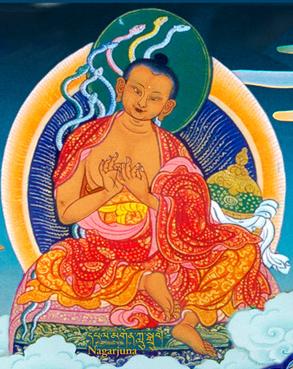
 ཡོན་ཏནThis is just an example of what you can do using a CSS tooltip, feel free to get creative and produce your own!
རང་བཞིན་
ཡོན་ཏནThis is just an example of what you can do using a CSS tooltip, feel free to get creative and produce your own!
རང་བཞིན་